
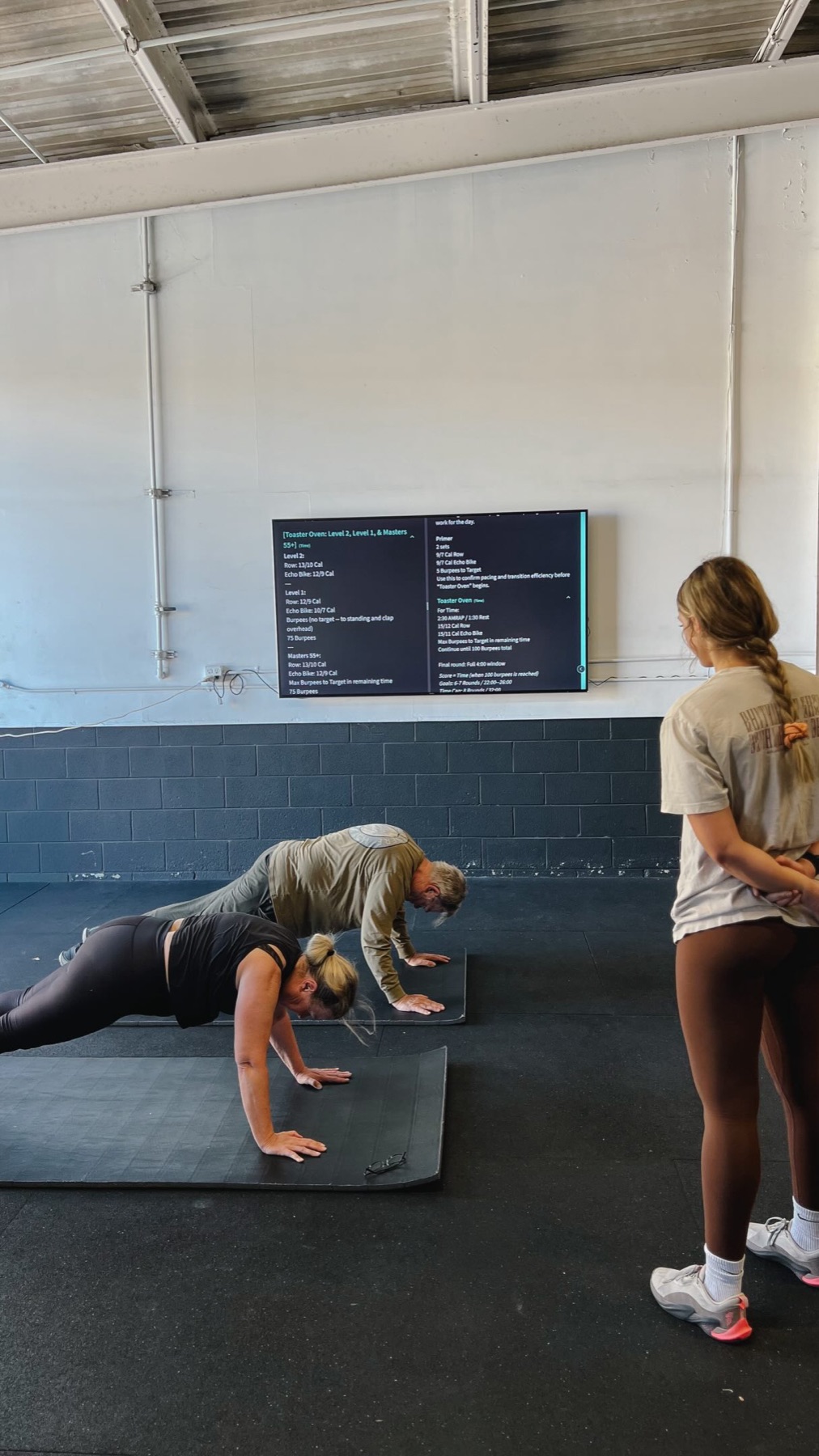
What watching your reps should look like
Watching is most of what a training session pays for. What real supervision looks like during a set, what it does not look like, and how to ask for it.
A training session is an hour in which somebody else is responsible for noticing what you cannot see yourself. Most of that noticing happens during your working sets, which is why where your trainer is looking matters more than almost anything they say.
What watching actually looks like
- They stand where they can see the joint that matters for the lift: from the side for a squat or a hinge, from the front for knees and feet.
- They cue during the set, briefly, while you can still use it, not only afterward.
- They notice when the last two reps look different from the first two.
- They stop the set, or take weight off, when your form slips, even if you had reps left.
Why the last reps matter most
Form usually holds while you are fresh and drifts as you tire. The reps a trainer most needs to see are the hard ones near the end of a set, which are also the easiest to miss when attention is somewhere else.
What it does not look like
- Checking a phone between counts.
- Setting up the next exercise while you finish this one.
- A conversation with someone across the room.
- Watching the first set of an exercise and assuming the rest look the same.
When less watching is fine
A warm up, easy conditioning or a movement you have done well for months needs less attention than a new lift or a heavy set. A good trainer spends attention where the risk is, and can tell you why.
How to ask for it
Say it plainly: “Can you watch my form on every working set, and stop me when it slips?” A good trainer hears that as useful information, not criticism. If nothing changes over the next few sessions, that tells you something too.
Where this does not apply
In a group class one coach divides attention across the room, so nobody gets eyes on every rep, and that is part of why a class costs less. One-on-one training is different: watching you is the service.
Common questions
How do I know if my trainer is watching my form?
They can tell you something specific about a rep you just did, and they correct it during the set rather than only after it.
Should a trainer stop a set early?
Yes, when your form breaks down. Finishing the reps matters less than not practicing the mistake under load.
Is it rude to ask a trainer to watch more closely?
No. It is a clear, fair request about the service you are paying for.
Keep going
Score your own trainer 0 to 10 on ten areas, this one included, and get the words to use at your next session.
Related guides
Come and see for yourself
A conversation costs nothing and answers more than any page.